Case studies / Sacred Leaf Trading
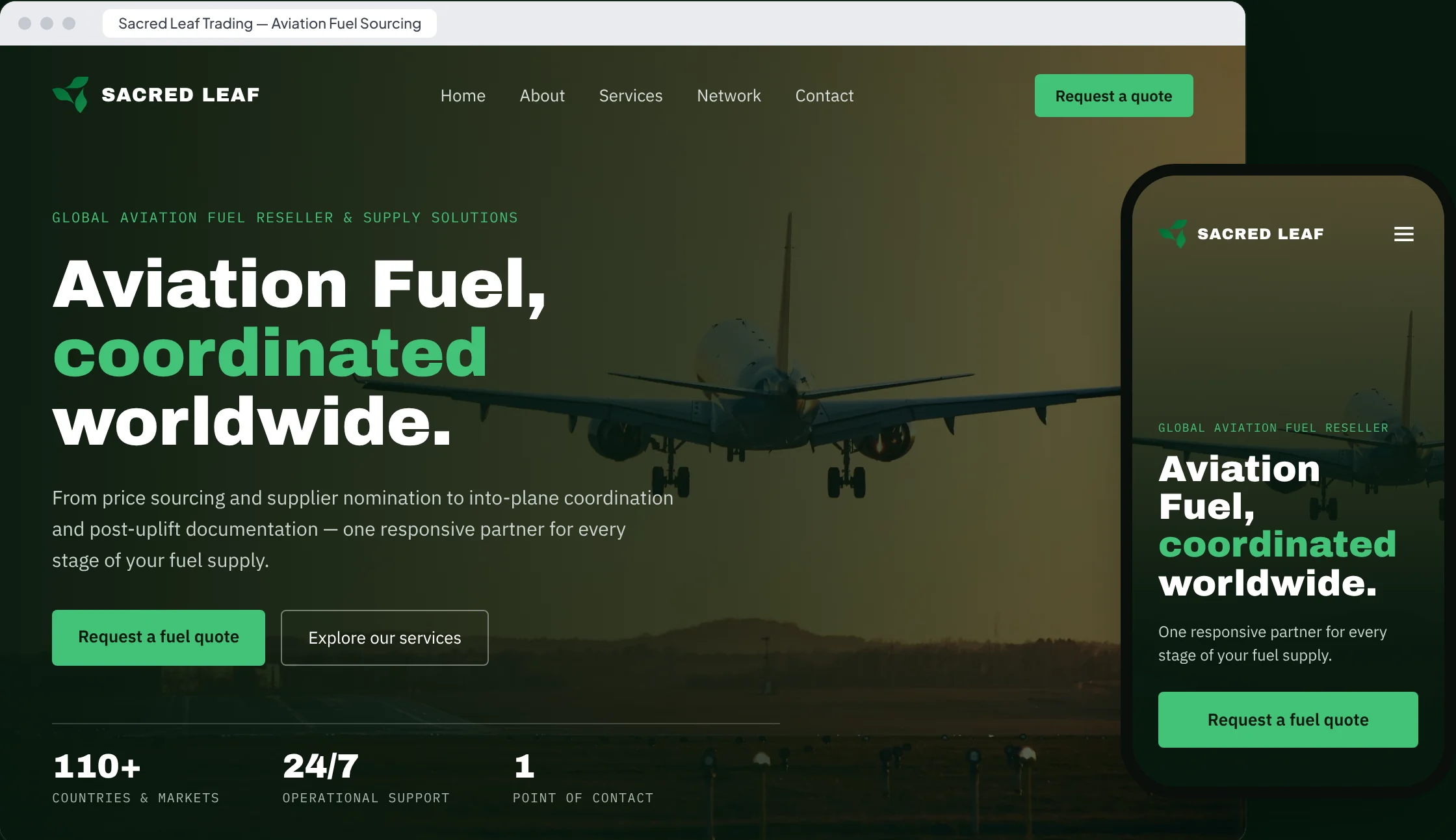
Sacred Leaf Trading coordinates aviation fuel for airlines, cargo, charter and government operators across 110+ countries from Dubai. We designed and built a five-page, CMS-managed website that explains a complex supply chain in seconds, proves global coverage, and turns every page into a route to a fuel quote.
Client
Sacred Leaf General Trading FZCO
Location
Dubai, UAE
Scope
UX, UI design, WordPress development
Timeline
3 weeks
The client
Sacred Leaf Trading is a global aviation fuel reseller and supply coordination company. Through a network of suppliers, airport fuel operators and into-plane providers, it handles fuel requests — from price sourcing to post-uplift documentation — for operators flying across five continents.
The brief
Sacred Leaf needed a credible digital front door for flight-ops and procurement teams who decide quickly and buy on trust. The site had to be easy for the team to update themselves, so we paired a bespoke design with a CMS behind every page.
The challenge
01
Fuel coordination happens over calls and email between suppliers, airports and into-plane providers. There's no product to photograph — the process itself had to become the hero.
02
“110+ countries” is easy to claim. Operators planning a specific route needed to check coverage for their destination, not take a slogan on faith.
03
Commercial airlines, cargo, business aviation, charter, private aircraft and government operations each needed to recognise themselves within seconds.
04
Time-critical requests — diversions, ad-hoc uplifts — demand a frictionless route to a quote and the 24/7 desk, from any page, on any device.
Our approach
We mapped how a fuel request actually moves through the business, then let that journey shape the information architecture.
01
Stakeholder sessions and a walk-through of the request-to-documentation journey with the operations team.
02
A lean five-page IA — Home, About, Services, Network, Contact — and a content model for services, regions and countries.
03
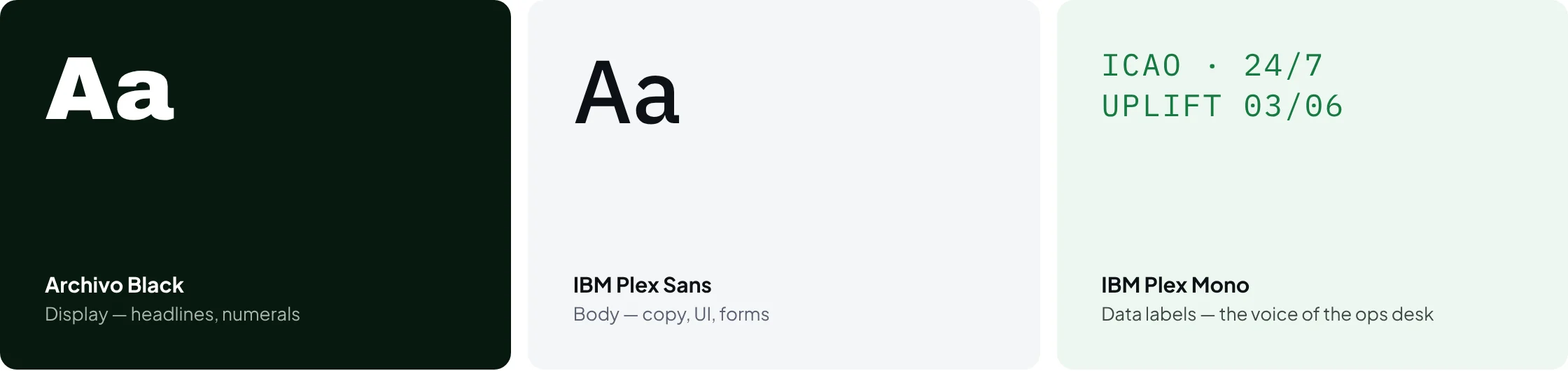
An aviation-grade visual system: deep apron green, a signal-green accent, heavy display type and mono data labels.
04
A custom WordPress theme with structured content, so services, coverage lists and contact details are editable by the team.
05
Cross-device QA, on-page SEO foundations, analytics on quote actions and a CMS handover for the team.
Key design decisions
01 — The process, made visible
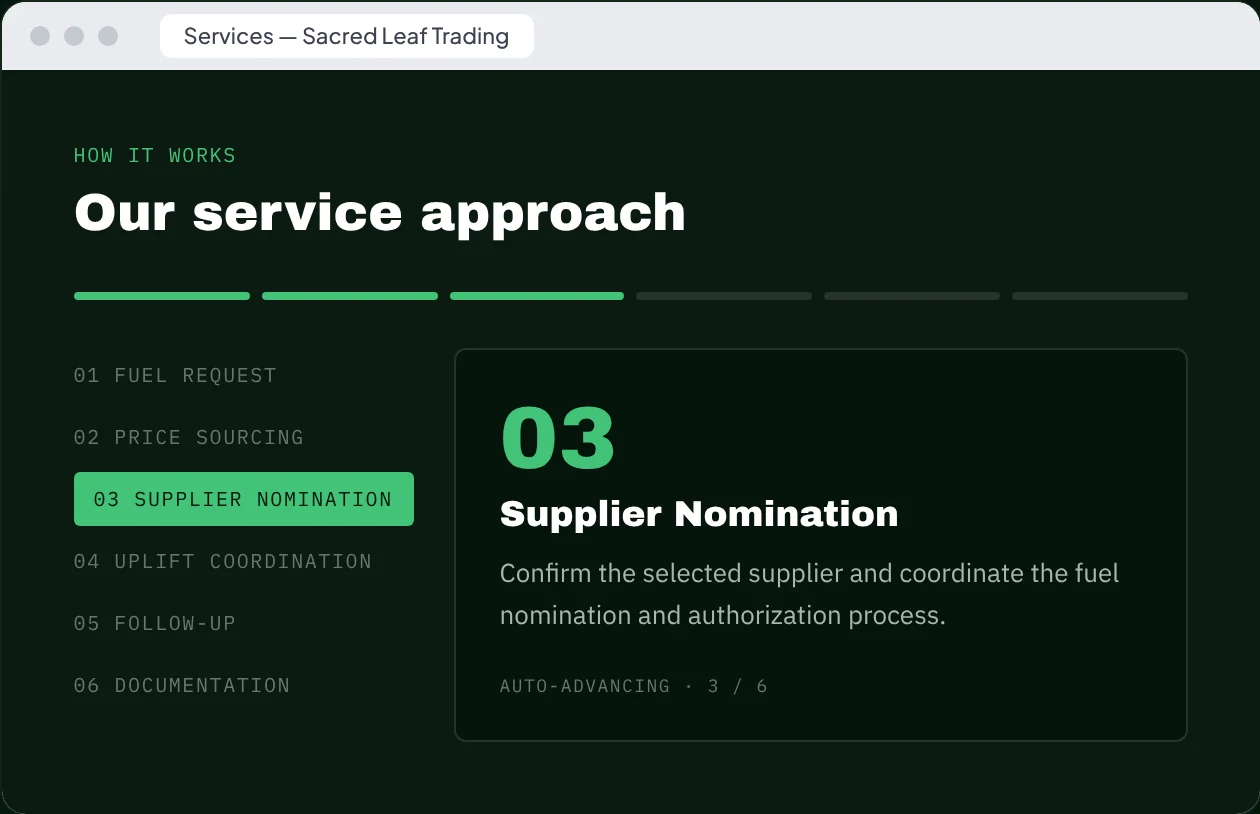
We turned the service approach into an interactive stepper — Fuel Request, Price Sourcing, Supplier Nomination, Uplift Coordination, Operational Follow-Up and Documentation. It auto-plays for skimmers and lets procurement teams click into each stage, so the “invisible” work becomes a sequence buyers can follow.
02 — Coverage you can check
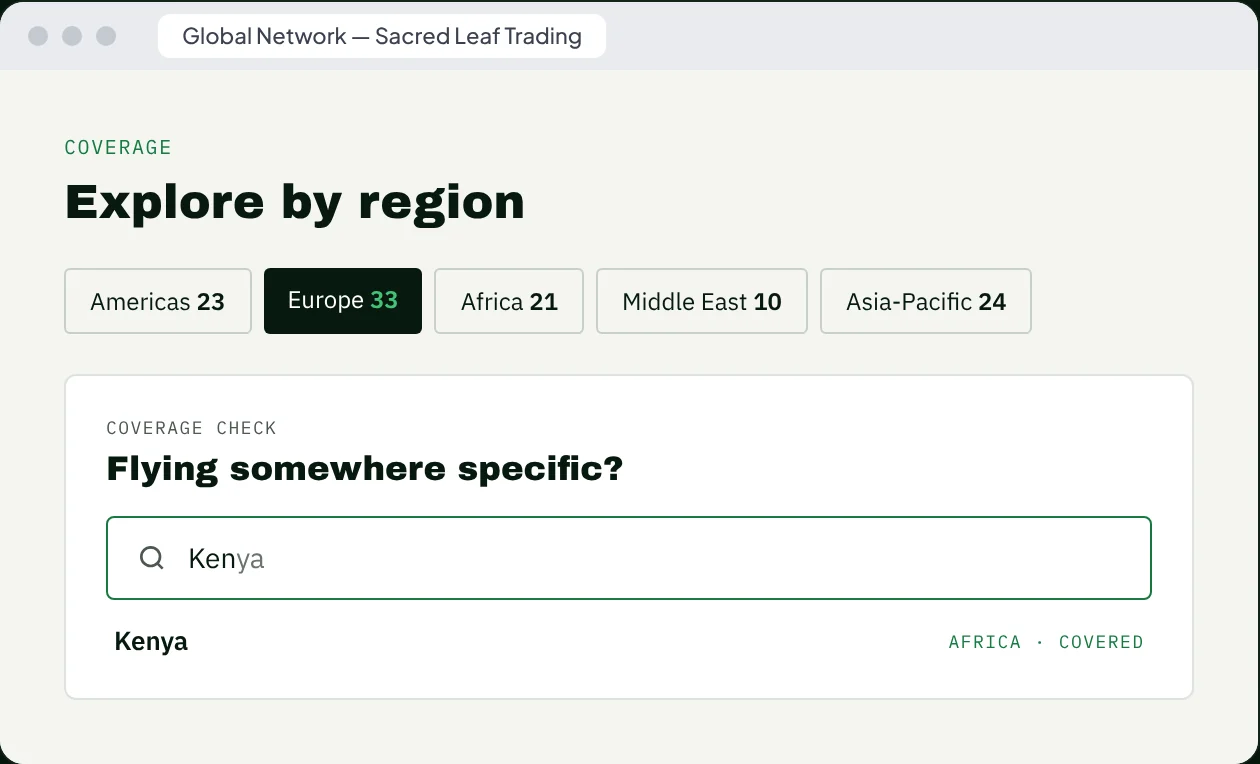
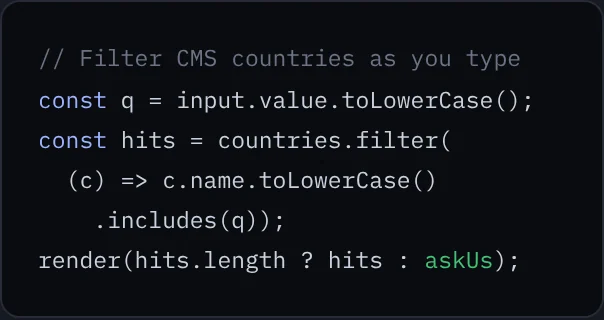
The Network page breaks coverage into five regions with live country counts, plus a type-ahead coverage check. A dispatcher planning a route can confirm a destination in seconds — and if it isn't listed, the empty state routes them straight to the team.
03 — Every operator, addressed
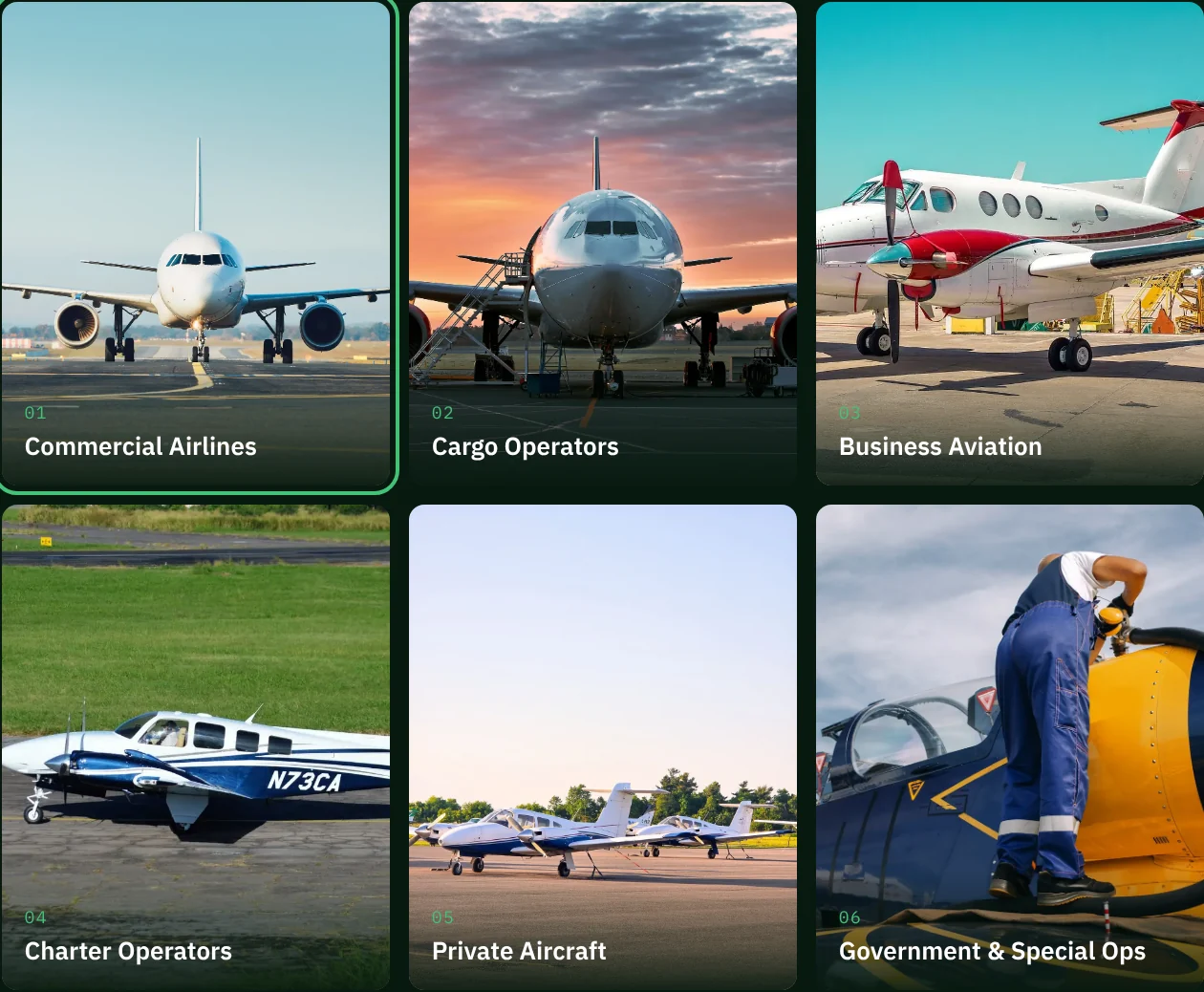
Instead of a generic “who we serve” list, a photographic switcher walks through six operator types — from scheduled airlines to government and special operations — so each visitor sees their own aircraft on the apron.
04 — Quote-first, on every page
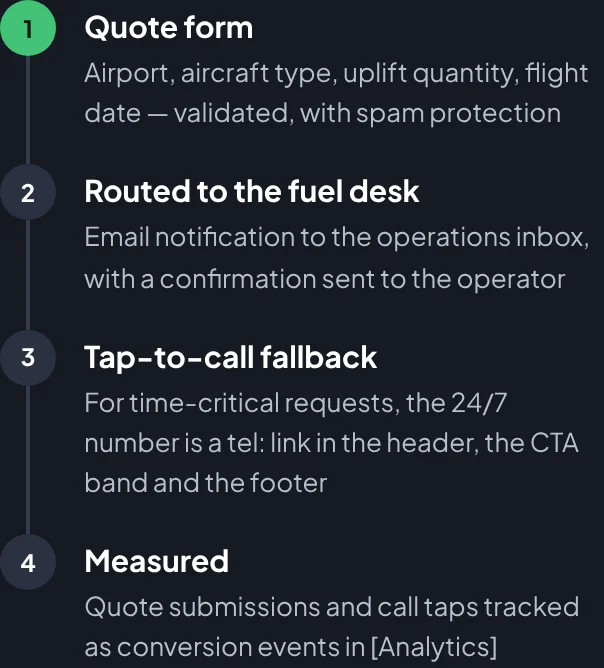
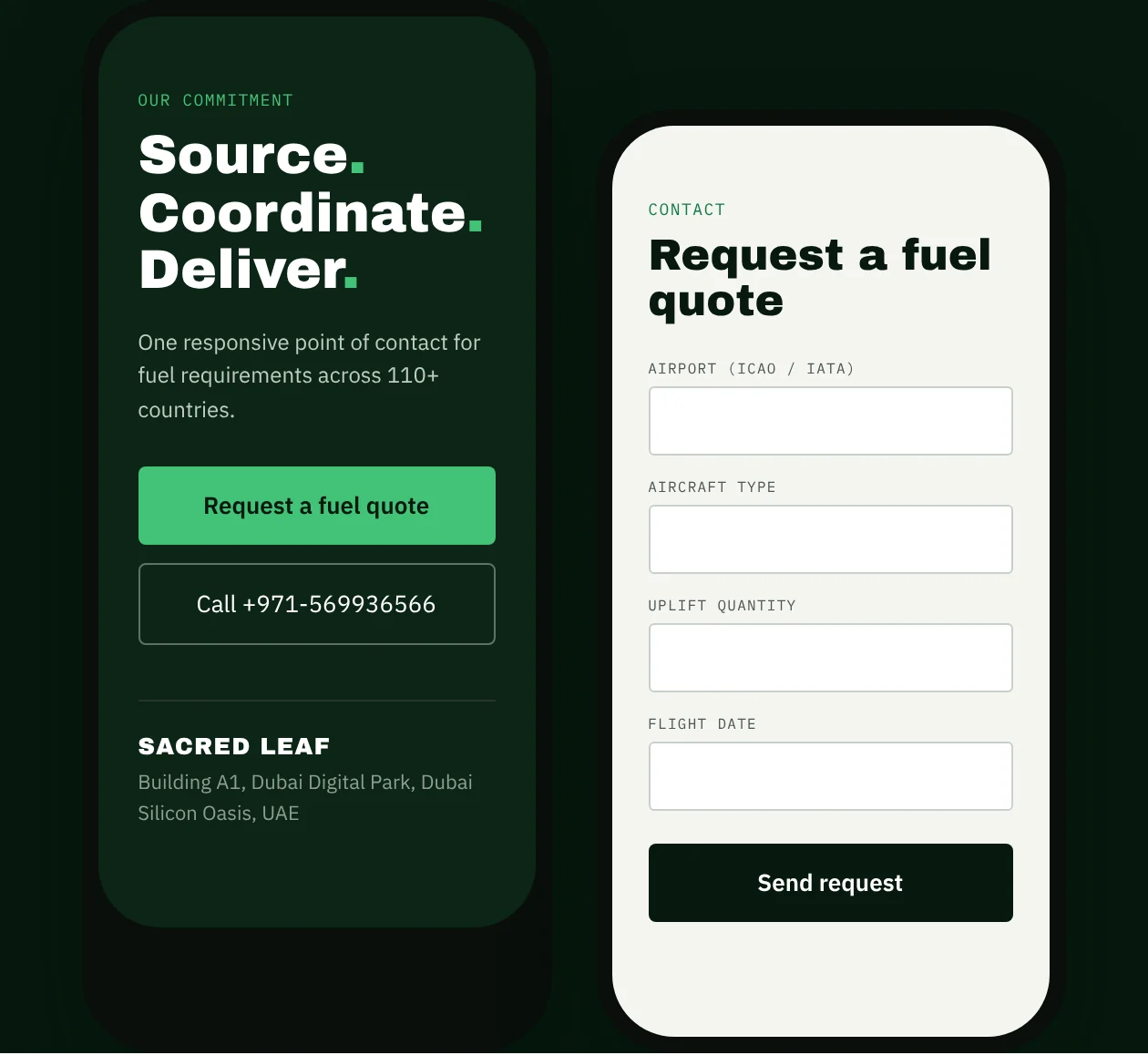
“Request a quote” lives in the header, after every capability and in a closing “Source. Coordinate. Deliver.” band on every page — with a tap-to-call number for time-critical requests. On mobile, the quote form asks only what the desk needs to start sourcing.
Visual system

Tech & development
No page-builder bloat and no off-the-shelf template. We coded a custom theme around Sacred Leaf's content, so every service, region and country is structured data the team edits in WordPress — and the interactive features read straight from it.
01 — CMS content model
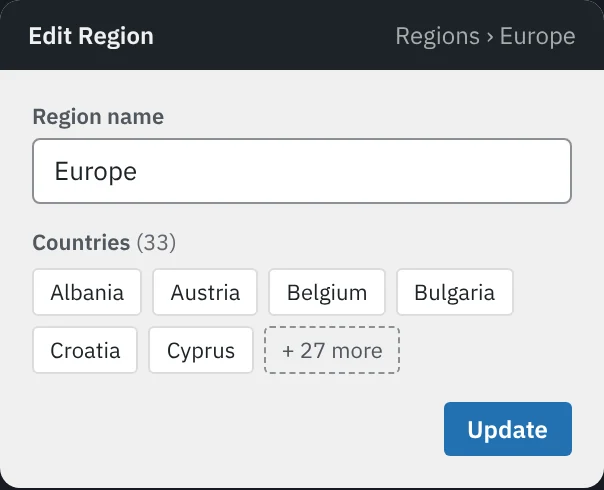
Each part of the site is its own content type with custom fields. When the team adds a country, the counts, region lists and coverage search all update — nobody edits a layout.
02 — Interactive components
Four small vanilla-JS components read the CMS data straight from the page, so the site stays light and fast.
03 — Forms & integrations
The quote form collects only what the desk needs to start sourcing. Every submission is routed and tracked, and the 24/7 line is one tap away on mobile.